
Guide to Perth Office Lease Negotiations and Contracts
Ready for a new office in Perth? Before you lease an office, read our 10-page guide and make the best decision for your business.
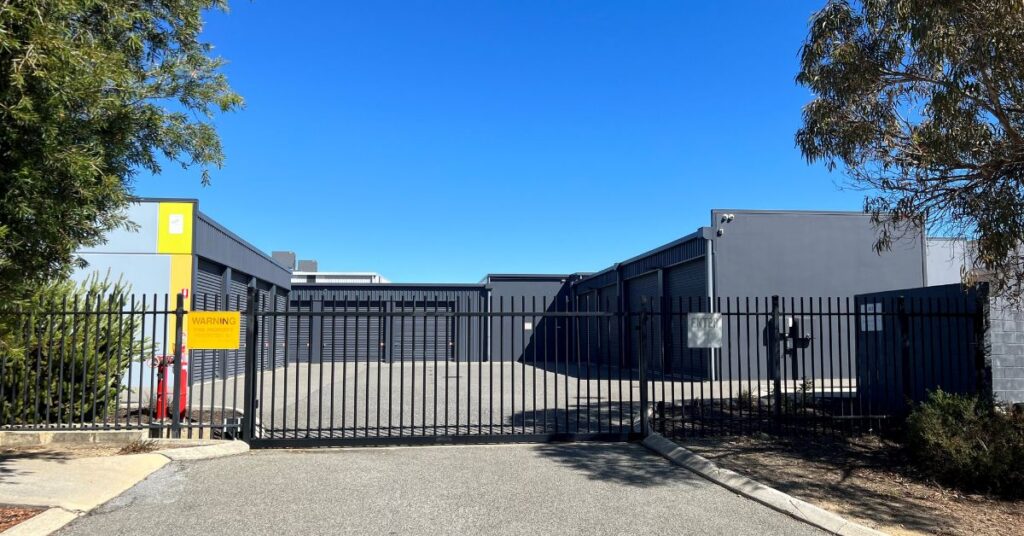
Commercial property management fees in Perth are usually charged as a percentage of the rent your property collects. For most commercial properties the management fee sits in the region of 4 to 10% of rent, which is the range we publish on our Perth commercial property management page, with the exact figure set by agreement between you and the agency. Where your property lands in that range depends on the type of property, the number of tenancies and how much work the lease creates.
That is the short answer. The rest of this article explains why the range is that wide, how the fees are structured, the extra charges to ask about before you sign, and what the rules in Western Australia say about who ultimately carries the cost.
If you have searched for an official schedule of commercial property management fees in Australia and come up empty, there is a reason. REIWA does not publish fee guidelines for its member agencies. The institute notes that suggesting fee levels could breach the Competition and Consumer Act, and that government regulations do not fix real estate fees in WA. Fees are set by agreement between the owner and the agency, and management fees are normally paid monthly.
The practical effect for you as an owner is that any average commercial property management fee you read, including our range, is market observation rather than an industry standard. Two agencies quoting the same percentage can be offering quite different things, so the fee only means something once you know exactly what it covers.
In WA, commercial property management fees are typically structured in one of two ways, either a percentage of the gross collections or a fixed fee per month or year. Gross collections means the money actually received from the tenancy and outgoings, and the fee is calculated as a percentage of that amount. A manager paid on collections has a direct interest in your tenant paying on time and your property staying tenanted.
Both fee structures attract GST. If you are registered for GST you will also charge GST on your commercial rent, and the ATO confirms you can generally claim GST credits for the GST included in your managing agent’s fees. If you are weighing up a purchase rather than a management agreement, our guide to GST on commercial property covers how it applies to the transaction itself.
Why the range runs as wide as 4 to 10% comes down to workload:
One tenant in one building is one lease, one rent review and one point of contact. Six tenancies in the same building is six of everything, plus common area management.
Industrial and warehouse tenants tend to sign longer leases and need less week-to-week attention. Retail and small office tenancies turn over more often, and each turnover means marketing, negotiation, a make-good discussion and a fit-out.
Turnover rent, staged rent reviews, options to renew and outgoings that are split several ways all take more administration than a flat annual rent with a fixed increase.
Older stock generates more maintenance calls. That is not a criticism of older buildings, it is just more phone calls.
For most commercial properties in Perth’s south-eastern corridor, the base management fee should cover:
That last point is worth expanding upon. Two managers charging the same percentage can report very differently, and reporting is how you know whether the property is doing what you bought it to do. Ask to see a sample report before you sign anything.
The management percentage is rarely the whole cost. None of the following are unreasonable, but all of them should be in writing before you agree to anything.
| Fee | When it is charged | What to ask |
| Leasing fee | When a new tenant is signed | What is the basis, and how does it differ from a renewal? |
| Lease renewal fee | When an existing tenant re-signs or exercises an option | Is it lower than a new leasing fee? |
| Lease preparation and documentation | When a lease is drawn up | Who prepares it, and at what cost? |
| Advertising and marketing | When the property is re-let | Is it charged at cost? |
| Outgoings reconciliation | Annually | Is it inside the management fee or billed separately? |
| Rent review or market review fee | When a formal market review is carried out | Is it a flat charge or a percentage? |
| Repairs and maintenance coordination | As repairs arise | Is a margin added to trade invoices, and if so, what is it? |
One documentation cost is worth understanding up front. For leases covered by WA’s retail tenancy legislation, a landlord cannot require the tenant to pay the legal costs of preparing, negotiating, renewing or extending the lease, so budget for that cost rather than assuming it can be passed on.
There are two questions you can ask to quickly cut to the important aspects and understand what’s on offer. First, what is the total cost, in dollars, of running my property for a full year with no changes? Second, what does it cost in a year where one tenant leaves and is replaced? The gap between those two numbers is usually where the real difference between quotes sits, and in some cases it makes sense to pay a higher fee for an agent with a stronger track record since a drawn-out vacancy is often the difference between making and losing money from your property.
Owners who have had a residential investment managed are sometimes surprised that commercial percentages can run higher. For reference, a national fee guide puts typical residential management fees in metropolitan WA at 8.5 to 11% of the weekly rent. The difference is in the work:
In commercial leases the tenant usually contributes to costs such as council rates, water rates, insurance and maintenance. Working out what is recoverable, invoicing it and reconciling it at year end takes real accounting that residential management does not involve. Our guide to outgoings on commercial rental property explains how recovery works.
Commercial rent generally carries GST, which brings its own reporting.
When a commercial tenant leaves they are usually required to return the premises to an agreed condition. Negotiating and enforcing make-good is often the single most contested part of a commercial tenancy.
A commercial lease might run five or ten years with options. Getting a rent review or an option clause wrong is expensive for a long time.
A vacant commercial building can sit for months rather than weeks, so avoiding that is the most essential part of what you are paying for.
We compared the two investment types in more depth in residential vs commercial property investments.
It depends on the type of lease. For non-retail commercial leases, which cover most industrial and office property in suburbs like Belmont, Welshpool and Kewdale, the lease sets out which of the owner’s costs the tenant contributes to, and the Small Business Development Corporation notes that non-retail leases might include costs such as management fees and legal fees. If recovering the management fee matters to you, it needs to be written into the lease from the start.
Retail is different. Under WA’s Commercial Tenancy (Retail Shops) Agreements Act 1985, a landlord is not entitled to recover management fees from a retail tenant, even where the lease says otherwise. The Act generally applies to retail premises with a lettable area of up to 1,000 square metres, which captures most shops and small retail strips. It also requires operating expenses to be itemised in the lease and caps how much land tax can be recovered. If you own retail premises in Victoria Park or Cannington, the management fee is your cost to carry, which is why understanding fees in detail is important before engaging a manager.
REIWA’s latest commercial market update reported that industrial property was Perth’s top performing commercial sector in the year to December 2025, with the median sale price per square metre rising 15.5% to $2,935. Office rose 9.8% to $4,844 and retail 4.0% to $5,237. The South East sub-region, which covers our corridor from Belmont through Welshpool and Kewdale to Cannington, recorded more industrial sales than any other part of Perth in the year to September 2024, with 281. We looked at what that tight supply means for owners in our article on the industrial supply squeeze in south-east Perth.
Office conditions are improving too. The Property Council of Australia’s July 2026 Office Market Report puts Perth CBD office vacancy at 15.4%, down from 16.9% in January 2026.
When values and rents move this quickly, the cost of a missed rent review or an unrecovered outgoing grows with them. Paying a management fee on a well-tenanted property is cheap compared with owning an undermanaged one in a rising market.
If you own a single commercial property, the honest answer is that it depends on the tenant and on your own time. A quality tenant on a long lease who pays on time and looks after the building is not much work. The moment that tenant gives notice, or stops paying, or the outgoings reconciliation is due, the picture changes. Our article on what commercial property management involves walks through the day-to-day.
The day-to-day management is not what tends to catch single-property owners out. Instead, it is missing rent review opportunities, not recovering the outgoings properly, or being unable to enforce a make-good. Any one of those will often cost more in a single year than several years of management fees.
We manage commercial, industrial and strata property across 16 suburbs in Perth’s south-eastern corridor, from small offices and strata units to storage yards and industrial warehouses. Many of our current agents are property managers, we have worked this corridor since 1989, and REIWA ranked us a Top 5 Commercial Office in Western Australia in 2024.
If you want to know what your property should be earning and what it would cost to have it managed properly, ask us for a rental appraisal. There is no cost and no obligation.
Contact us today to discuss your commercial property management needs, or call (08) 9277 6677.
Most commercial property management fees in Perth are charged as a percentage of the rent collected, generally in the region of 4 to 10%. There is no set industry rate. REIWA does not publish fee guidelines, so the fee for your property is set by agreement and reflects the number of tenancies, the property type and the complexity of the lease.
Yes. Fees in WA are set by agreement between the owner and the agency, not fixed by regulation. Before negotiating on the percentage alone, compare what each fee covers, because a lower headline rate with more separate charges can cost more across a full year.
Yes. GST is payable on the management fee and on other fees charged by the agent. If you are registered for GST, you charge GST on your commercial rent and can generally claim GST credits for the GST included in your managing agent’s fees.
Only under some leases. Non-retail commercial leases can provide for the tenant to contribute to management fees if the lease is written that way. Under the Commercial Tenancy (Retail Shops) Agreements Act 1985, management fees cannot be recovered from a retail tenant regardless of what the lease says.
Ask for the leasing fee, lease renewal fee, lease documentation costs, advertising costs, outgoings reconciliation charges, rent review fees and any margin on maintenance invoices, all in writing. Then ask for the total annual cost in dollars for a year with no changes and a year with one tenant turnover.




Ready for a new office in Perth? Before you lease an office, read our 10-page guide and make the best decision for your business.

The sale of each commercial property is a unique transaction and will often attract GST. Planning to factor in the GST (goods and services tax) into your budget is a wise move on your property investment journey.

Commercial property in Perth continues to provide an attractive investment opportunity for those across the country. Our commercial property outlook takes industry data and advice to share predictions for 2024.